

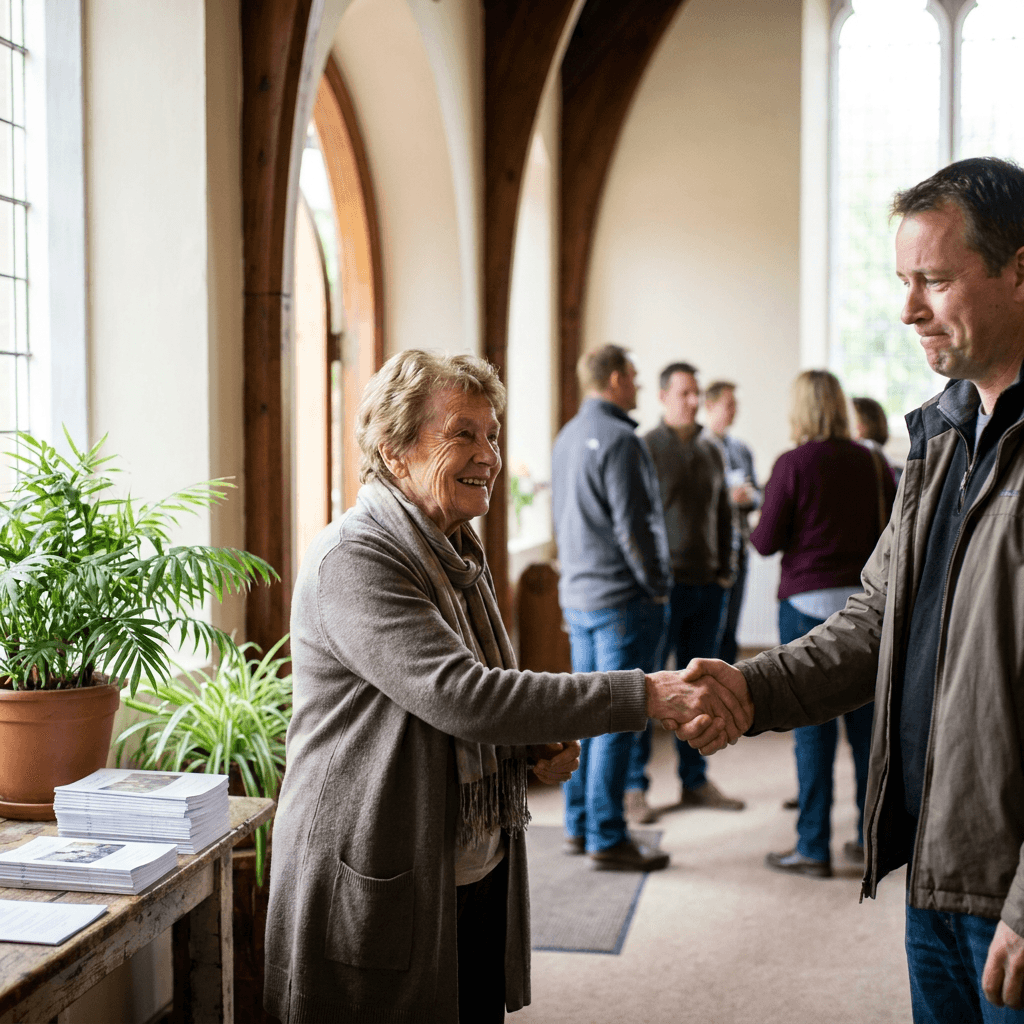
Most churches care deeply about welcoming visitors. The gap is usually not heart. It is training. Many members want to be friendly, but in the moment they freeze and default to one line: "Hi, are you new here?"
That question is not wrong, but by itself it can feel awkward or transactional. This guide gives practical coaching points and natural conversation starters your team can use right away.
What visitors are feeling before they ever speak
First-time guests are often managing uncertainty. :
- Will anyone notice me?
- Will I feel judged or pressured?
- Will my kids be okay?
- Will this be socially awkward?
Great greetings reduce uncertainty quickly. Your goal is not to "work the room." Your goal is to lower anxiety and help people feel safe.
Train the posture before the script
Conversation works best when body language communicates warmth first.
- Eye contact: brief, steady, friendly.
- Open stance: shoulders relaxed, hands visible, no crossed arms.
- Approach angle: come from the front or side, not from behind.
- Pace: slow down. Fast speech feels nervous and rushed.
People read posture before they process words.
Better openers than "Are you new here?"
Use openers that invite conversation without putting visitors on the spot.
- "Glad you made it this morning. How's your day going so far?"
- "Welcome in. I'm [Name]. What's your name?"
- "Have you been able to find everything okay?"
- "I'm really glad you're here. Is there anything I can help you with before service starts?"
- "What brought you out this morning?" (gentle tone, no pressure)
Notice each opener creates room for a person to share only as much as they want.
Conversation framework: 3 easy moves
Teach members this simple rhythm:
- Warm opener (welcome + name)
- Low-pressure question (helpful, not interrogative)
- Practical next step (kids check-in, coffee, where to sit, restrooms)
Example:
"Hey, I'm Marcus — glad you're here. Have you found coffee and kids check-in yet? I can walk you over if that helps."
Talking points members can keep in their back pocket
- "What part of town are you coming from?"
- "How did you hear about us?"
- "Do you have kids joining us today?"
- "After service, a lot of folks hang for a few minutes in the lobby if you want to connect."
- "If this is your first time, we'd love to help you get oriented at your own pace."
These prompts feel natural and avoid sounding scripted.
What to avoid
- Rapid-fire questions: it can feel like an interview.
- Insider language: avoid acronyms and internal references.
- Forced humor: if it misses, anxiety goes up.
- Cornering: never trap someone in a long conversation.
- Hand-off confusion: if you promise help, walk with them.
Role-play training exercise (30 minutes)
Run this once per month with greeters and key volunteers:
- 10 min: teach posture + opener list
- 10 min: pair role-play (visitor + greeter)
- 10 min: feedback on tone, clarity, and pacing
Give one coaching point per person, not ten. Small consistent improvements win.
Follow-up that feels human
Welcome is not complete at the front door. Train members to reconnect briefly after service:
- "Really glad you came today. How was your experience?"
- "If you come back next week, I can save you a seat near [kids/check-in/exit]."
- "Can I introduce you to [pastor/leader/similar life-stage person]?"
Simple follow-up helps first visits become second visits.
Final takeaway
Hospitality is a ministry skill, and skills can be trained. When members are coached with practical language and clear next steps, visitors feel less like outsiders and more like people who belong.
If your church wants to strengthen guest experience, start with one team, one script sheet, and one monthly role-play. You will feel the difference quickly.