


Christmas is one of the few times all year when people who do not normally attend church are still willing to search, click, and show up. They are looking for a service time, a family tradition, a place to belong, or a quiet moment in a loud season. If your church wants to serve those people well, digital outreach cannot be an afterthought.
A strong Christmas outreach plan does not start with flashy graphics. It starts with clarity. People need to find your church quickly, understand what is happening, and feel confident enough to walk through the doors. This playbook focuses on the online pieces that make that possible.
Start with the questions Christmas guests are already asking
Most churches think first about what they want to announce. Guests think first about what they need to know. Before you build a campaign, list the questions a new person will ask in the first ten seconds: What time is the service? Is this family friendly? What should I wear? Where do I park? Will there be childcare? How long will it last?
Your digital outreach works best when it answers those questions before people have to hunt for them. That is why your website matters so much during seasonal outreach. If your event page is hard to find, slow to load, or vague about logistics, people will leave. A clear landing experience does more ministry than a clever headline. If you need a baseline for that experience, this guide on website must-haves that help new visitors show up lays out the essentials.
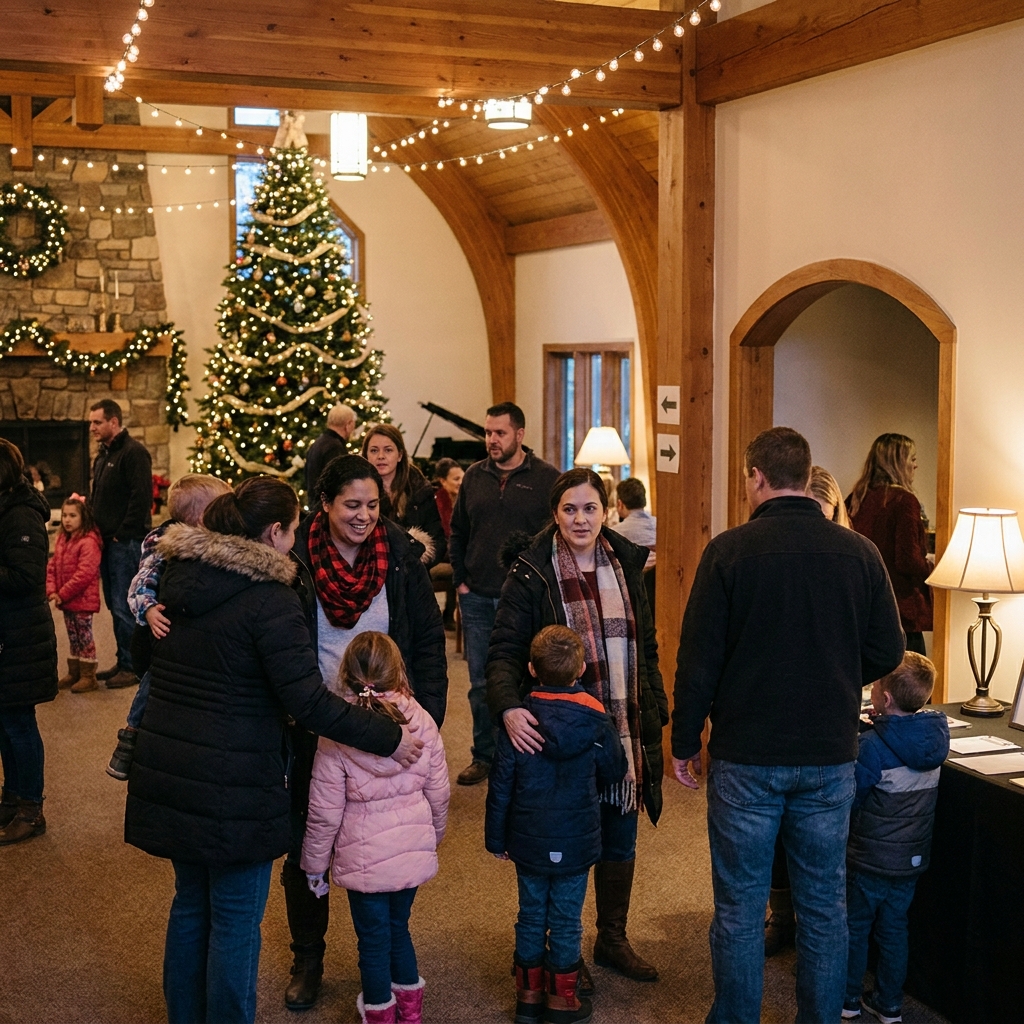
Build one simple Christmas hub instead of scattering information
Many churches spread Christmas details across Facebook posts, announcement slides, event pages, and a homepage banner, then assume people will piece it together. Most will not. Create one main Christmas page on your website and make every campaign point there.
That page should include service times, location details, nursery or kids information, parking notes, accessibility details, and a short explanation of what the service will feel like. If you have multiple events, break them into clear sections. If you stream your services, say that plainly. If you expect overflow attendance, mention arrival timing. The goal is to lower uncertainty.
This is also where your church's visual and verbal consistency matters. A visitor should feel the same tone on your website, email, and social posts. If the messaging shifts from formal to casual to confusing, trust drops. The same principle shows up in building an authentic church brand story, and Christmas is one of the clearest moments to apply it.
Use search, maps, and local discovery to reach people beyond your followers
Your members may see your social posts, but many Christmas guests will never follow your church before they visit. They will search. That means local discovery matters. Update your Google Business Profile, verify holiday hours, add Christmas service photos if you have them, and make sure your website links are correct. A surprising number of first time guests begin with a map result, not Instagram.
Christmas is also a strong season for churches to think carefully about intent-based visibility. People search for phrases tied to need and timing, not just denomination names. Terms like Christmas Eve service, candlelight service, family Christmas service, or churches near me spike because people are trying to decide where to go right now. That is why stronger local visibility and clear event pages matter more than broad awareness campaigns in this season. For a practical breakdown of local search basics, see this playbook for Google Business Profile and local discovery.
If your church uses Google Ads Grants, Christmas can also be a timely window to support outreach pages with search traffic. The key is not running generic ads. The key is matching specific guest intent with a page that answers real questions. Churches that understand this usually waste less attention and create a better first impression.

Create a light campaign rhythm across email, text, and social
People rarely respond because they saw one post one time. They respond because the message stays clear and repeated across the channels they already use. A useful Christmas campaign rhythm is simple: announce early, remind consistently, and get more specific as the date gets closer.
For example, your first wave can focus on invitation and vision. Why is this season meaningful, and who should consider coming? The middle wave can focus on practical details such as service times, childcare, music, and accessibility. The final wave should remove friction, answering the last minute questions that keep people from attending.
Email and text are especially helpful for people who are already near your church but not deeply connected. Social media helps create familiarity, but direct channels help people act. If your team tends to overcomplicate this, it helps to step back and build a repeatable communication structure first. This article on a church communications plan people actually follow is a strong foundation for that work.
Plan for follow-up before Christmas arrives
A lot of churches treat Christmas like the finish line. It is better to treat it like an opening. If a family visits your church in December and then hears nothing meaningful afterward, the outreach did not fail because attendance was low. It failed because the next step was unclear.
Before your first Christmas service begins, decide what happens after a guest attends. That may include a simple welcome email, a short text message, a landing page for next steps, or an invitation to an upcoming January series. Keep it warm, specific, and easy to respond to. Good follow-up should feel like hospitality, not data collection.
This is where many churches quietly lose momentum. They work hard to earn one visit, then miss the chance to build a relationship. Thoughtful follow-up is one of the most practical ways to turn seasonal attendance into longer term connection.
Measure what helped people take the next step
You do not need a complicated dashboard to learn from Christmas outreach. A few simple questions will tell you a lot. Which page got the most visits? Which email had the strongest click rate? Did people use map directions from your profile? Which service times filled first? What questions kept coming up from guests?
Those signals help you improve next year, but they also sharpen your communication all year long. Christmas exposes friction quickly because guest intent is high. If people still struggle to find details in December, they are probably struggling in ordinary weeks too.
Use this season to build better habits, not just bigger promotion. The churches that grow from holiday outreach are usually the ones that get clearer, not louder.
If your team wants a better framework for making church events easier to discover and easier to attend, spend some time tightening your website, search visibility, and communication rhythm now, then carry those improvements into the rest of the year through a stronger digital ministry foundation.