



Beyond the Bulletin: Building a Church Communications Plan People Actually Follow
Let's be honest. For many churches, "communications" means someone scrambling to get the bulletin out on time, maybe a quickly drafted email, and a Facebook post whenever someone remembers. It's often reactive, a little chaotic, and honestly, sometimes a bit of a afterthought.
But what if your church's messages weren't just sent, but actually received? What if your community felt truly informed, connected, and engaged? That's the power of a solid church communications plan. It's not about being slick or fancy, it's about being strategic and clear. It's about serving your congregation better.
Step 1: Understand Your Audience (Really Understand Them)
Before you even think about what you want to say, you need to think about who you're talking to. This isn't just about knowing their age and whether they prefer coffee or tea after service. This is about understanding their needs, their preferred ways of receiving information, and what motivates them.
Think about the different groups within your church. You have long-time members, new visitors, young families, empty nesters, teenagers, people who only come for specific events. Each of these groups might have different questions, different levels of tech savviness, and different concerns. A busy parent might appreciate a quick text reminder about an event, while a senior member might still prefer a call or a printed announcement. A teenager probably won't be reading a long email, but they might respond well to an engaging Instagram story.
How do you find this out? Ask! Talk to people. Do some informal surveys. Watch how people interact with your current communication efforts. Are emails being opened? Are people clicking on links? Are they asking questions that you thought you already answered?
The goal here isn't to create a dozen different messages for every single thing. It's to understand the core ways to reach the majority of your people effectively. This understanding forms the bedrock of your entire church communications plan.
Step 2: Define Your Core Messages and Goals
Once you know who you're talking to, you need to figure out what you actually want to say and why. This sounds obvious, but it's often where things get fuzzy. Are you trying to inform people about upcoming events? Encourage volunteer sign-ups? Share spiritual insights? Promote a new ministry? Each of these has a different feel and requires a different approach.
Start by making a list of the recurring information you need to communicate. Weekly service times, special events, prayer requests, new sermon series, youth group activities, outreach opportunities. For each item, ask yourself: What's the main takeaway? What do we want people to do after receiving this information? Do we want them to sign up, show up, or simply be aware?
Having clear goals for your communication isn't about being overly corporate. It's about being effective. If your goal for an announcement about a potluck is to get 20 people to sign up, you'll craft a different message than if you just want people to know it's happening. Think about your church's overall mission and how your communication efforts support that mission. Every message should, in some way, contribute to that larger purpose.
Step 3: Choose Your Channels Wisely
This is where many churches get overwhelmed. There are so many options: email, social media, website, bulletins, announcements from the pulpit, text messages, postcards, flyers. You don't need to be everywhere all the time. The key is to be effective where your audience is.
Based on your understanding from Step 1, where do your people actually pay attention? For some, the bulletin might still be king. For others, an email newsletter is their go-to. Younger members might live on Instagram or TikTok. Don't chase every trend; focus on the channels that genuinely serve your congregation best.
Consider the strengths of each channel. Your website, for example, is your central hub for detailed information and resources. It's where people go when they want to really dig in. Social media is great for quick updates, event reminders, and building community through visual content. Email is perfect for sending out regular, clearer updates and for communicating with specific groups. For churches looking to streamline their online presence, our church social media management services can help.
The goal is to create a channel strategy that works together, rather than having each channel operate in a silo. For instance, an announcement from the pulpit might direct people to the website for details, which then links to a sign-up form. Everything should flow logically.

Step 4: Create a Content Calendar and Assign Responsibilities
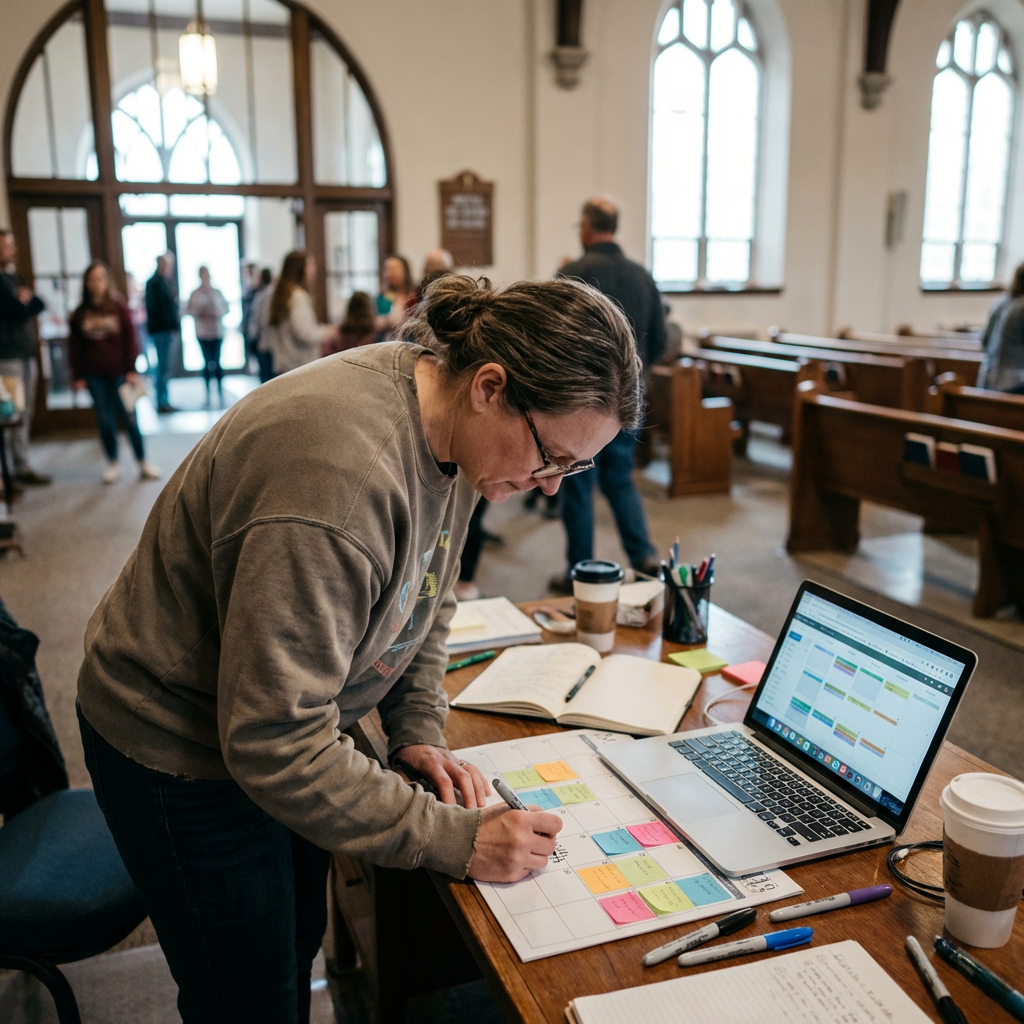
Now that you know who, what, and where, it's time to plan the "when" and "who does it." A content calendar is simply a schedule for your communications. It doesn't have to be fancy – a shared Google Sheet or even a large whiteboard can work.
Map out your recurring communications first: weekly bulletin, monthly newsletter, regular social media posts. Then, add in your special events: Easter services, VBS, mission trips, fall festivals. For each item, note: what it is, what channels it will be publicized on, the key message, and the deadline for completion.
This calendar does two key things. First, it ensures you don't miss important deadlines or forget to promote something important. Second, it helps you avoid last-minute scramble. Imagine knowing weeks in advance that you need a graphic for the youth retreat, rather than remembering the day before.
Equally important is assigning responsibilities. Who writes the bulletin? Who schedules the social media posts? Who sends out the emails? Make sure these roles are clear and that the people in them have the time, skills, and resources they need. Even in a small church, clear roles prevent things from falling through the cracks or one person getting completely overwhelmed.
Step 5: Review, Learn, and Adapt
A communications plan isn't a set-it-and-forget-it document. It's a living guide that needs regular attention. After you've implemented your plan for a while, take time to review what's working and what isn't. This can be as simple as asking for feedback or as involved as looking at email open rates and social media engagement numbers.
Are people signing up for events as expected? Are fewer people asking questions about things that were clearly communicated? Are certain messages getting more traction than others? Don't be afraid to tweak things. Maybe your email newsletter is too long. Maybe your social media posts are too infrequent. Maybe people are ignoring the bulletin board entirely.
The church and its community are constantly changing. New members join, technology evolves, and congregational needs shift. Your communications plan should evolve with it. Regular review ensures your efforts remain fresh, relevant, and effective in connecting with your people.
Building an effective church communications plan might seem like a big undertaking, but it's an investment that pays off in a more informed, connected, and engaged congregation. It moves you from reactive messaging to planned connection, so your church's heart and mission are truly heard.
Ready to get some help putting these principles into action? Explore our services to see how we can assist your church in crafting a communication strategy that truly connects.