



Launching a church plant usually starts with prayer, people, and a place to gather. Then reality shows up. Most first-time guests will meet your church online before they ever meet your launch team in person. They will search your name, check your website on a phone, scan your social profiles, and decide in a few seconds whether they understand who you are and whether they can picture themselves walking in.
That is why church plant marketing is not mainly about polished branding or trying to look bigger than you are. It is about removing confusion. A strong digital presence helps neighbors understand your doctrine, your location, your gathering time, and the kind of community you are building, before they have to take the social risk of showing up.
Start with clarity before you start posting
New churches often feel pressure to be active everywhere at once. That usually creates a scattered launch. Before you build a website or schedule a single post, define five basics in plain language: who you are trying to reach, where you are gathering, when you are launching, what kind of church you are planting, and what next step you want interested people to take. If those answers are fuzzy internally, your public presence will feel fuzzy too.
This is where identity matters. A church plant does not need a fancy slogan, but it does need a clear story. If you have already worked through your mission and personality, principles from authentic church brand story development can help you describe your congregation in a way that feels honest instead of generic.
Simple clarity beats big language. A neighbor should be able to land on your homepage and understand, within moments, whether your church is meeting in a school, a home, a rented event space, or a permanent building. They should also know whether they can expect a launch team preview gathering, a public Sunday service, a Bible study, or a community interest event first.
Build a website that works like a launch guide
A church plant website should function less like a brochure and more like a guided first visit. The homepage needs the basics above the fold: church name, city, launch status, service time if it exists, and a direct next step. If you are still in preview season, say that plainly. If the launch date is set, make it obvious. Ambiguity costs trust.
Strong launch websites also answer the questions nervous guests rarely ask out loud. Where do I park? What should I wear? Is there kids ministry yet? Are you meeting every week or starting with monthly interest gatherings? A practical page structure keeps those answers easy to find. If you want a helpful benchmark, compare your launch site against the principles in this guide to church website must-haves for new visitors.
Mobile experience matters even more for a church plant. Many people will discover you from a shared Instagram post, a local Facebook mention, or a Google search on their phone. If your site loads slowly, hides service details, or buries the address under several clicks, you are making the first step harder than it needs to be.

Claim the local discovery channels early
One mistake church plants make is waiting too long to establish the places people naturally search. If your launch has a public location and real gathering presence, set up your Google Business Profile carefully and keep the name, address, and hours consistent with your website. Google expects organizations to represent themselves accurately in the real world, and consistency helps local discovery make sense to searchers.
For a church plant, local discovery matters because many guests are not looking for your name yet. They are searching for churches near them, churches in a certain part of town, or a congregation that fits a specific stage of life. Your website and Google presence work together. If you want to go deeper on the local side, this Google Business Profile playbook for churches is a useful companion.
Do not create duplicate listings, stuff your church name with extra keywords, or list a launch address that changes every week without explanation. A church plant does not need to game search. It needs to be accurate, consistent, and easy to verify.
Choose a small number of channels you can sustain
The goal of early church plant marketing is not to dominate every platform. The goal is to show signs of life where your people already spend time. For many plants, that means a website, Google Business Profile, Instagram or Facebook, and an email capture form. That is enough to build a stable front door.
Social media should support the launch, not replace it. Post content that helps people see real people, real gatherings, and real momentum. That can include short welcome videos from the planter, behind-the-scenes setup photos, prayer requests for the neighborhood, team member introductions, and reminders about launch milestones. A healthy rhythm often beats high volume. If your team is small, fewer posts with actual substance will do more good than daily filler.
You also need to think beyond announcement graphics. Many church plants confuse activity with communication. Stronger patterns are explained in a practical church communications plan, especially if your team is juggling volunteers and limited time.
Create a path from curiosity to connection
A digital presence is only useful if it helps people move toward a real relationship. That means every channel should point toward one or two simple next steps. Join the email list. RSVP for a preview service. Attend a launch team interest night. Fill out a plan-your-visit form. Ask for prayer. The exact step can change by season, but the path should stay obvious.
Church plants often attract interest before they are fully ready for weekly guest assimilation. That is fine, as long as your follow-up matches the stage you are in. If people are joining an interest list months before launch, send useful updates, not silence. Let them know what is happening, what to expect next, and how they can pray or participate. Momentum drops fast when curiosity meets a dead end.
This is also where simple systems matter. Someone should own inbox replies, social direct messages, plan-your-visit forms, and text follow-up. A growing church plant can lose people long before Sunday if online questions sit unanswered for days.
Let your digital presence feel human, not inflated
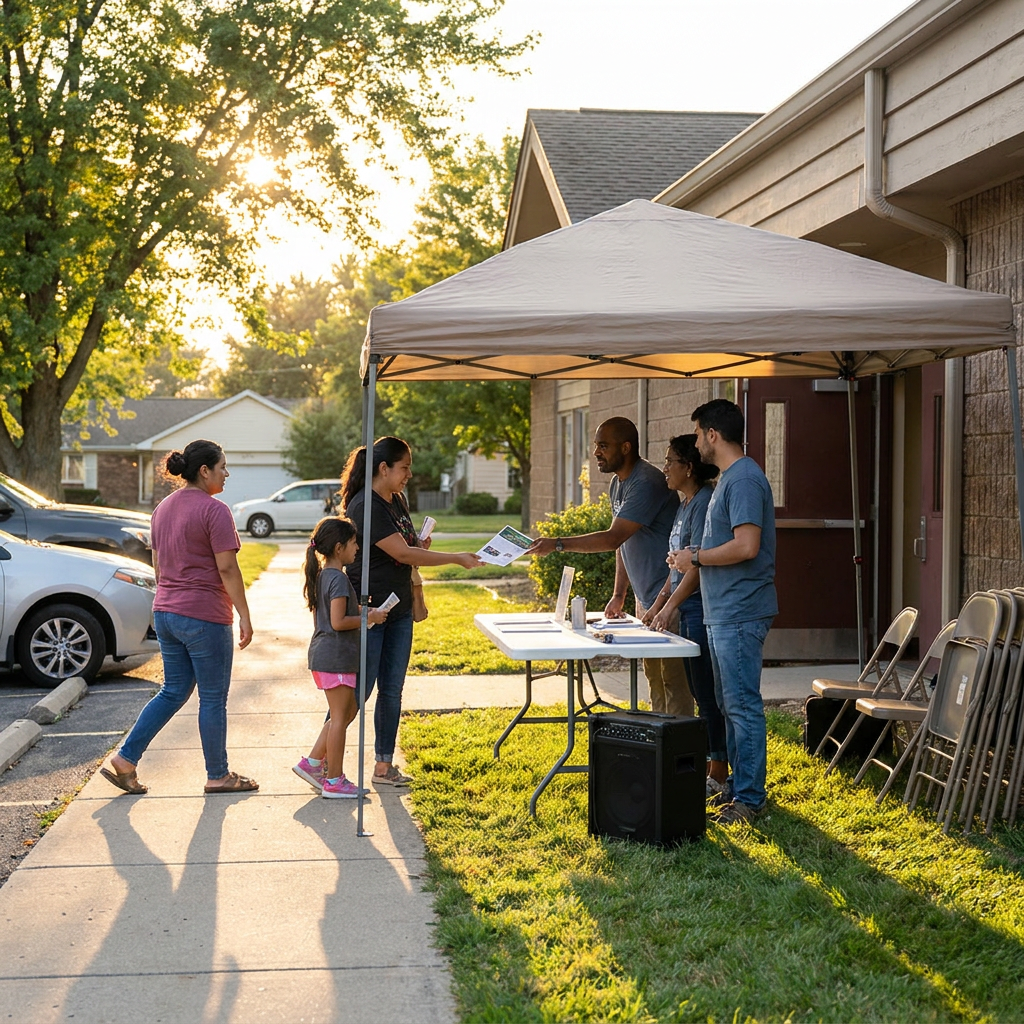
The strongest church plant marketing does not pretend the church is already large, finished, or fully built out. It gives people a believable picture of what God is starting. Show your team serving. Share the story of why the church exists. Talk about the community you hope to bless. Use photos and language that reflect your real season.
That honesty builds trust. Guests are not looking for a perfect production. They are looking for a church that feels clear, warm, and credible. A simple launch with accurate information and steady communication will usually outperform a flashy launch that feels vague or overproduced.
If your church plant is getting ready to launch or refine its digital front door, start with the basics: clear messaging, a website that answers first-visit questions, a few active discovery channels, and a follow-up path that works. If you want a practical next step, browse church marketing resources and support here and compare your current launch presence against what a first-time guest actually needs to know.