


Church events often get planned with good intentions and clear ministry goals, then families hit the registration page and slow down. The event may sound great, but if the sign-up process feels confusing, too long, or missing practical details, parents put it off and often forget to come back.
That is why family event registration deserves more attention than many churches give it. Registration is not just paperwork before the real ministry starts. It is part of the ministry experience itself. When it feels clear and easy, families sense that your church understands real life and has thought ahead.
Families do not experience registration as an admin task
Church staff may think of registration as a way to estimate attendance, plan supplies, or organize volunteers. Families experience it differently. To a parent, registration is the first test of whether this event will feel manageable. They are quietly asking practical questions right away. How long will this take? Do I have all the information I need? Am I signing up one child or my whole household? Will this create more hassle than it solves?
That gap matters. A process that feels simple to the church can feel annoying to a busy parent who is juggling dinner, sports schedules, and bedtime while trying to decide whether a church event fits the week. If your event promotion is strong but the sign-up experience creates friction, some of your best interest disappears before a family ever walks through the door.
This is one reason event communication and registration should be planned together. Churches that already think carefully about how people follow a church communications plan are usually better at creating registration flows that feel consistent instead of pieced together at the last minute.
Shorter forms usually lead to better follow-through
Many church event forms ask for too much because teams are trying to solve every possible question up front. Name, email, phone, child names, ages, allergies, address, emergency contacts, group preferences, volunteer interest, and how the guest heard about the church can all end up on one form. The problem is not that those details are never useful. The problem is that families often will not push through a long form for a simple event.
The better question is not, "What would be nice to know?" It is, "What do we truly need in order to welcome this family well?" If the event is a family movie night, you may only need a parent name, contact information, headcount, and one or two child-related notes. If the event involves childcare, classroom placement, or safety considerations, then the needed fields may expand. Even then, the goal should be to collect only what helps the event run smoothly.
Keeping forms shorter also helps churches act on the information they do collect. A crowded form often produces messy data, skipped fields, and volunteer confusion. A simpler one tends to create cleaner follow-through.
Answer practical family questions before they have to ask
Parents hesitate when registration pages leave out the details that matter most to family logistics. They may want to know when doors open, whether dinner is provided, if younger siblings can attend, what the pickup process looks like, whether childcare is available, and how long the event will actually last. If those answers are hidden or absent, families have to do extra work to decide whether the event fits their life.
That is where a strong event page matters. Registration gets easier when the page around the form does its job first. Clear details reduce uncertainty and help parents move from interest to action. This is especially true for guests or newer families who do not already know how your church handles parking, check-in, or children's ministry transitions. In that sense, registration works best when it is supported by the same clarity that makes a church website feel welcoming to new visitors.

When the right details are easy to find, the form feels lighter because parents are no longer guessing what they are signing up for.
Registration should work well on a phone first
A lot of family sign-ups happen in quick moments, between errands, from a church announcement text, or while scrolling after bedtime. That means mobile experience matters more than many churches realize. A page that looks acceptable on desktop can still feel frustrating on a phone if buttons are small, fields stack awkwardly, or the form jumps around while someone types.
For most churches, the simplest improvement is to test the full process on an actual phone before sharing the link. Open the page from a text message. Complete it one-handed. See how long it takes. Notice where the flow feels clumsy. Those small checks often reveal the exact problems families would have run into on their own.
Mobile-first thinking also helps when follow-up reminders go out later. Churches that already use text messaging well for ministry communication often see better event follow-through because the registration and reminder experience feels connected instead of scattered across too many channels.
Family events need one clean path, not multiple conflicting ones
Churches sometimes create confusion by sharing several paths to sign up at once. A social post says message us for details. The website has one form. A paper handout points to another link. A volunteer tells families to sign up in the app. None of those options are wrong by themselves, but together they can create uncertainty about which one actually matters.
Families respond better when the church creates one clear registration path and uses every channel to point back to it. Social posts can build awareness. Stage announcements can create urgency. Email can explain the details. The actual sign-up should still lead to one dependable destination. That same clarity helps with attendance planning and makes volunteer prep less messy on the back end.
This becomes even more important when a family event includes child check-in, classroom grouping, or safety logistics. The more moving pieces there are, the more helpful it is to have one clean system instead of several partial ones. That is part of why processes like children's ministry check-in and event registration should be thought through together rather than separately.
Better registration builds trust before the event begins
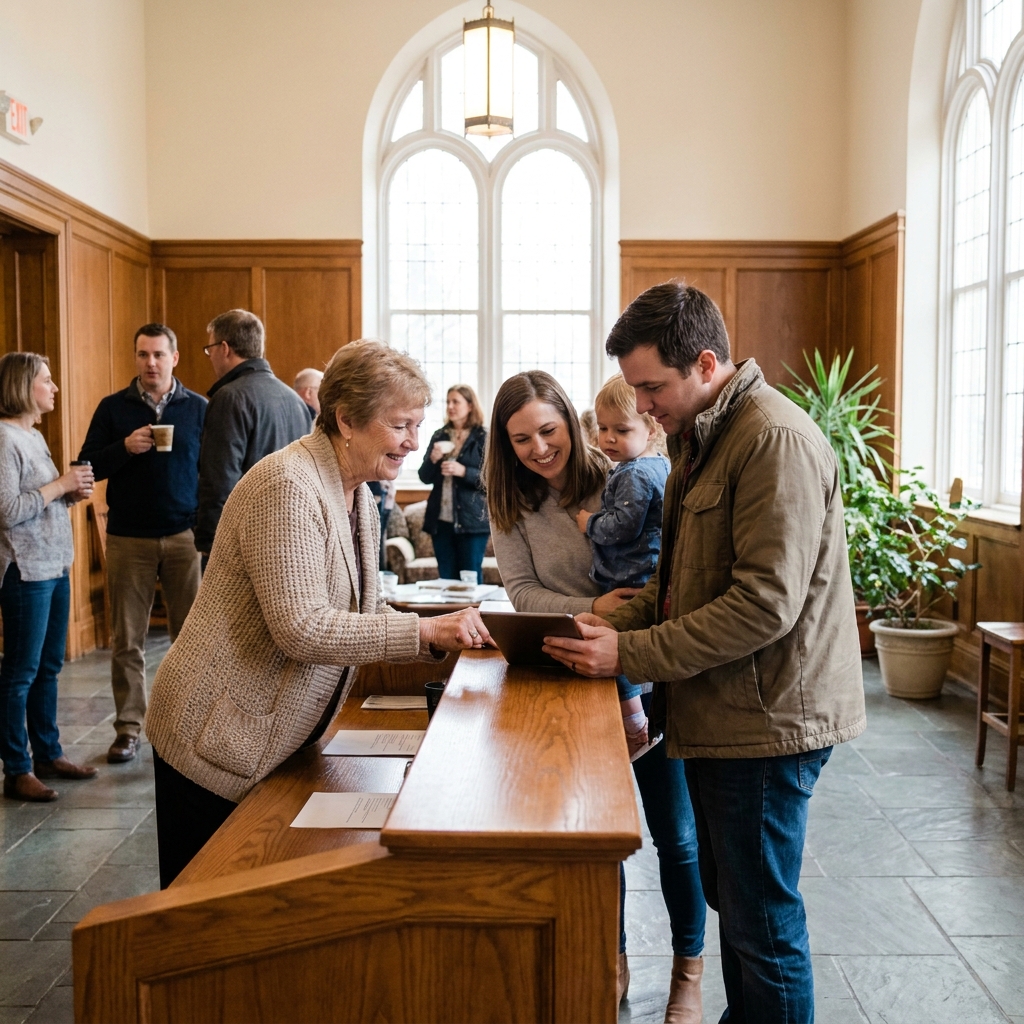
Easy registration does more than improve attendance numbers. It tells families your church is organized, considerate, and prepared to welcome them. That matters because trust with parents is often built through small moments, not big speeches. A smooth sign-up page, clear event details, and a clean reminder flow all send the same message: this church respects my time and is ready for us.
That trust compounds. When parents have one good event experience, they are more likely to register again for the next one. Volunteers field fewer confused questions. Staff spend less time fixing preventable problems. Over time, better registration becomes part of a larger family experience that feels steady and thoughtful instead of reactive.

If your church wants family events to feel easier from the first click forward, start by simplifying the path to sign up. Clear details, shorter forms, and one dependable registration flow can remove more hesitation than another round of promotion alone.
If your church is working on family communication, event pages, and guest-friendly digital systems, take a look at more practical next steps at Red Letter Connect.