


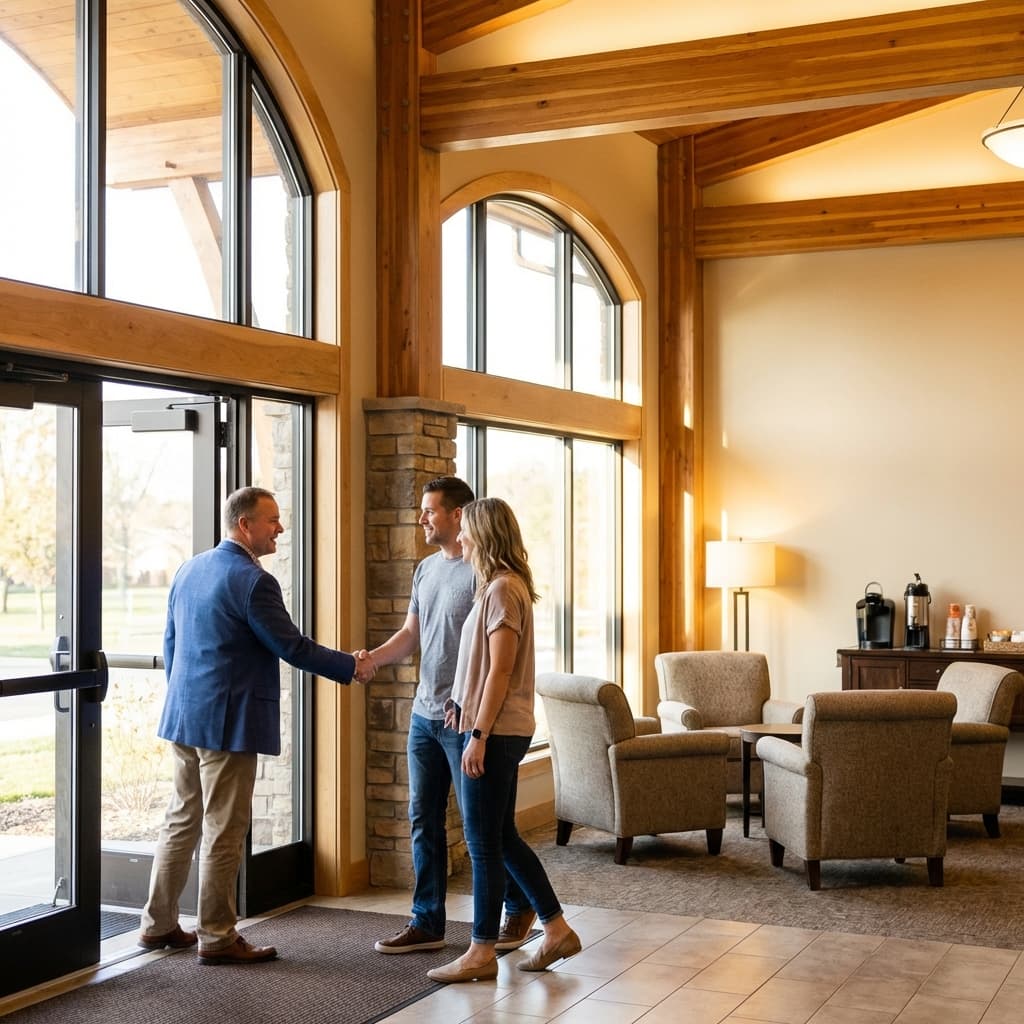
Most churches are pretty good at getting first-time visitors through the door. The harder problem is getting them to come back a second, third, and fourth time. Research consistently shows that if a visitor doesn't return within the first few weeks, the odds of them ever becoming a regular attendee drop significantly. So the real question isn't "how do we get more visitors?" It's "what happens after they leave?"
This post walks through a structured framework for turning first-time guests into long-term members. Each step has a clear purpose, and skipping any of them creates a gap that visitors quietly fall through.
Why Most Visitors Don't Come Back
Before building a retention system, it helps to understand what's actually going wrong. The most common reasons visitors don't return have nothing to do with the sermon or the worship music. They're operational.
- Nobody talked to them. They walked in, sat down, listened, and left without a single personal interaction.
- They couldn't figure out where to go. No signage, no greeters, no one to point them toward the kids' area or the coffee.
- Nothing happened after. No follow-up email, no text, no phone call. The church gave no signal that their visit mattered.
- They felt like outsiders. Everyone else clearly knew each other. Inside jokes from the stage. No one made space for them at the table.
These aren't personality problems. They're system problems. And systems can be fixed.
Step 1: Make the First Ten Minutes Intentional
Visitors form their opinion of your church in the first ten minutes, and most of that opinion has nothing to do with what happens on stage. It's about the parking lot, the front door, and the lobby.
Here's what an intentional first-ten-minutes system looks like:
- Parking lot greeters who can direct visitors to the main entrance (especially important for larger campuses or shared buildings).
- Door greeters who make eye contact, say hello, and offer to walk visitors to the sanctuary or kids' check-in.
- A visible welcome area with clear signage and a friendly face. Not a folding table with a clipboard. A real station where someone is ready to help.
- A guest gift that's actually useful. A coffee mug, a small devotional, or even just a card with service times and the church Wi-Fi password. Something that says "we were expecting you."
The goal here isn't to overwhelm visitors. It's to remove friction. A visitor who can't find the bathroom or doesn't know where their kids go is already halfway to not coming back.
Step 2: Capture Contact Information (Without Being Pushy)
You can't follow up with someone if you don't know how to reach them. But visitors are wary of connection cards that feel like a data collection exercise. The key is to make it feel like a fair exchange.
Approaches that work well:
- Digital connection cards via a QR code on the seat or in the bulletin. Most people prefer tapping their phone over filling out a paper card in front of strangers.
- A simple text-to-connect number. "Text HELLO to [number]" during the welcome segment. Low friction, high response rate.
- Tie it to the guest gift. "Stop by the welcome desk to grab your gift and let us know you were here." The gift is the incentive; the info capture is natural.
Whatever method you choose, only ask for the basics: name, email, phone (optional), and how they heard about you. Anything more than that and you'll lose them.

Step 3: Follow Up Within 48 Hours
This is the step most churches either skip entirely or do too late. If a visitor comes on Sunday and doesn't hear from you until Thursday, you've already lost momentum. The follow-up window is 24 to 48 hours.
A strong follow-up sequence looks like this:
- Sunday afternoon or Monday morning: A short, personal email from the pastor or a staff member. Not a mass newsletter. Something that says "I'm glad you came. Here's one thing I think you'd enjoy next week."
- Tuesday or Wednesday: A brief text message. "Hey [name], this is [volunteer name] from [church]. Just wanted to say it was great meeting you on Sunday. Let me know if you have any questions about the church."
- The following Sunday: If they return, have a greeter or volunteer ready to recognize them by name. This is the moment that converts a visitor into a returner.
The difference between a church that retains visitors and one that doesn't is almost always the speed and quality of follow-up. It doesn't need to be elaborate. It needs to be prompt and personal.
Step 4: Create a Clear Path to Belonging
Getting someone to return two or three times is good, but it's not the same as belonging. People stick with a church when they feel like they're part of something, not just attending something. That transition requires a clear, visible pathway.
The most effective retention systems offer a defined next step within the first month:
- A newcomers' class or lunch. Something in particular for people who've visited in the last 4 to 6 weeks. Keep it casual, keep it short (60 to 90 minutes), and make it about connection, not information overload.
- Small group placement. Help visitors find a group that fits their life stage. A young couple with kids has different needs than a retired single adult. Don't just hand them a list. Make a specific recommendation.
- A volunteer opportunity. This might seem premature, but research on organizational belonging shows that people who contribute feel more connected than people who just consume. Even a small role (greeting, setting up chairs, helping with kids' ministry) gives someone a reason to show up beyond the sermon.
The pattern here is simple: move people from the audience to the community as quickly as they're comfortable. The longer someone sits in the pew as a passive observer, the easier it is to drift away.

Step 5: Track and Measure What's Working
You can't improve what you don't measure. Most churches have a general sense of whether attendance is growing, but few track the specific metrics that matter for ministry momentum.
Three numbers worth tracking every month:
- Visitor-to-second-visit rate. Of the people who visited for the first time this month, what percentage came back within 30 days? If this number is below 20%, your follow-up system needs work.
- Second-visit-to-regular rate. Of the people who came back a second time, what percentage attended at least 3 of the next 8 Sundays? This tells you whether your "path to belonging" is working.
- Connection card response rate. What percentage of first-time visitors actually fill out a connection card or text your welcome number? If it's below 30%, you're making it too hard or not giving them a reason to.
These aren't vanity metrics. They're diagnostic tools that tell you exactly where your pipeline is leaking. A church with 100 visitors per month and a 10% retention rate is working ten times harder than a church with 30 visitors and a 40% retention rate.
Your church's digital marketing strengths play a role here too. If you're driving visitors through online channels, tracking which sources produce the most engaged returners helps you invest your time wisely. And once you understand the growth opportunities your church already has, you can focus retention efforts on the channels that are actually bringing people through the door.
Putting It All Together
Here's the full framework in a simple checklist format:
| Stage | Action | Timeline |
|---|---|---|
| Arrival | Greeters, signage, welcome area, guest gift | First 10 minutes |
| Info capture | Digital card, text-to-connect, or welcome desk | During visit |
| Follow-up | Personal email, text, name recognition | Within 48 hours |
| Belonging | Newcomers' class, small group, volunteer role | First 30 days |
| Measurement | Track visitor-to-return, second-to-regular, card response | Monthly |
Each stage feeds the next. Skip one, and the ones after it become less effective. The churches that consistently grow aren't doing anything flashy. They're just running this process reliably, week after week.
If your church is ready to build a visitor retention system but isn't sure where to start, reach out to our team for a free conversation about what's working and what might be falling through the cracks. You can also significantly enhance your church's online presence and digital outreach by leveraging Google Ads Grant for Churches to reach a wider audience. Furthermore, to ensure your church's online presence is as effective as possible, consider our Church Website Design Services to create a welcoming and informative digital hub.