

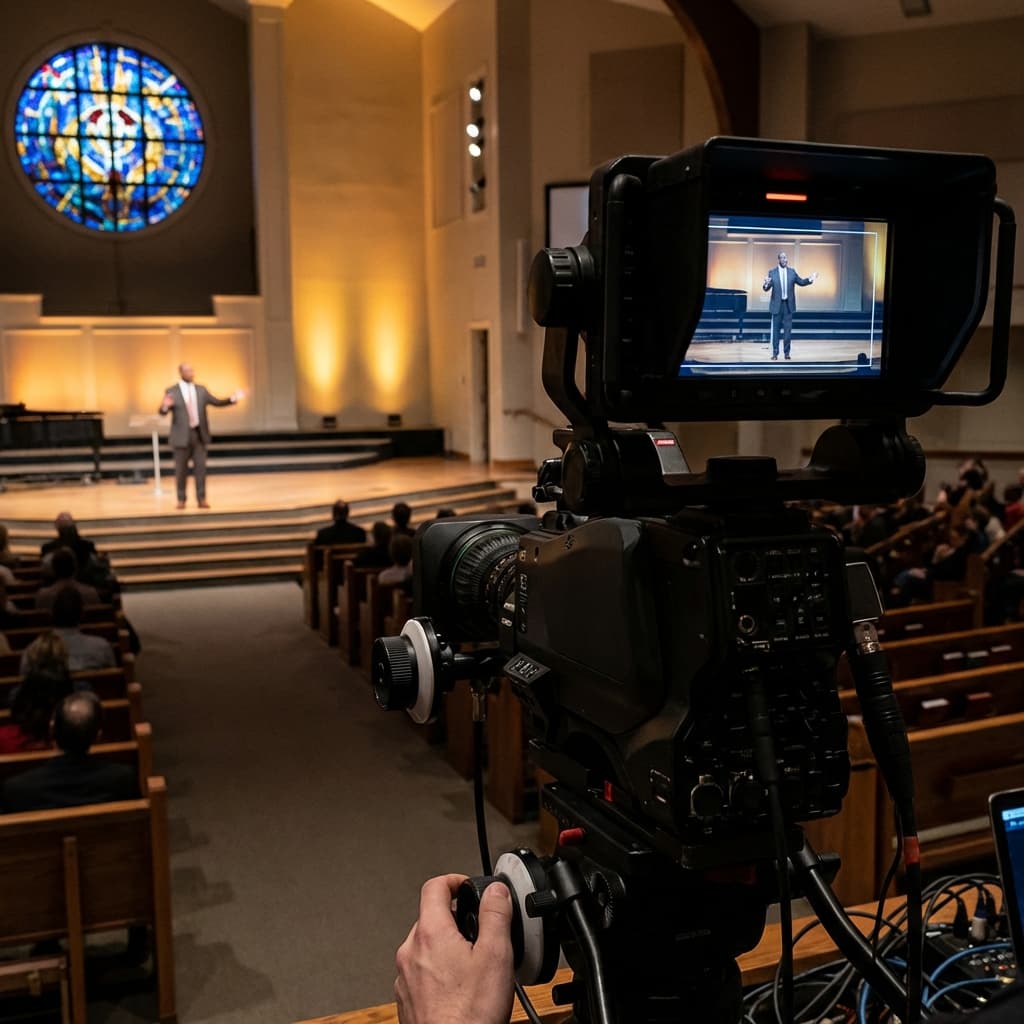
Your church probably already records sermons. Maybe you upload them to YouTube, maybe they sit on a hard drive somewhere. Either way, there's a platform with over 2 billion monthly users where people are actively searching for exactly the kind of content your church creates, and most churches are barely scratching the surface of what it can do.
YouTube isn't just a place to archive sermons. It's a discovery engine. People find churches, explore faith questions, and decide whether to visit based on what they see there. Understanding how your channel performs, and what the numbers actually mean, is the first step toward making it work harder for your ministry.
Why YouTube Is Different From Other Platforms
Facebook and Instagram are great for staying connected with people who already know their church. YouTube does something different: it puts your content in front of people who have never heard of you.
When someone searches "what does the Bible say about anxiety" or "church worship music" or even "churches in [your city]," YouTube serves up results. If your church has content that answers those searches, you show up. That's not true of a Facebook post from three weeks ago. YouTube content has a long shelf life. A sermon you uploaded two years ago can still bring someone to your channel today.
That's what makes YouTube uniquely powerful for churches. It's not about going viral. It's about being findable when someone is looking.
The Metrics That Actually Matter

YouTube gives you a lot of data. Most of it is noise for a church context. Here are the numbers worth paying attention to and what they actually tell you.
Total Views
This is the simplest measure of reach. How many times has someone watched one of your videos? It tells you the overall size of your audience and whether it's growing over time. Don't compare yourself to megachurches or professional creators. Compare yourself to where you were six months ago. That's the number that matters.
Video Count
Think of this as the size of your digital library. More videos means more entry points for someone to discover your church. Every sermon, every event recap, every testimony is another door someone can walk through. Churches that have been consistently uploading for years have a significant advantage here because they've built a library that keeps working even when nobody is actively posting.
Upload Frequency
Consistency matters more than volume. YouTube's algorithm rewards channels that upload on a regular schedule. A church that posts one video every week will generally perform better than one that uploads ten videos in a burst and then goes silent for two months.
You don't need to post daily. Weekly is great. Every other week is fine. The key is that when YouTube looks at your channel, it sees a pattern of regular activity. That tells the algorithm your channel is alive and worth recommending.
Engagement (Likes and Comments)
Likes and comments tell you something views alone can't: whether people are connecting with what you're putting out. A video with 200 views and 30 comments is doing more work than a video with 2,000 views and zero comments. Engagement signals to YouTube that your content is worth promoting, and it signals to you that your message is landing.
Common Missed Opportunities
Most church YouTube channels are leaving value on the table, not because they're doing something wrong, but because they don't know what's possible.
No custom thumbnails. YouTube generates a random frame from your video as the thumbnail by default. It's almost always unflattering. A simple custom thumbnail with the sermon title and the pastor's face can double your click-through rate.
Missing titles and descriptions. "Sunday Service 3/15" tells YouTube nothing. "What To Do When You Feel Lost | Pastor Mike | Grace Community Church" tells YouTube exactly what the video is about, which means it can recommend it to the right people.
No short-form content. YouTube Shorts (videos under 60 seconds) are one of the fastest-growing content formats on the platform. Pulling a powerful 45-second clip from a full sermon and posting it as a Short can reach an entirely different audience than the full-length video.
Sermons aren't trimmed. If your upload includes 15 minutes of worship music and announcements before the sermon starts, most new viewers will click away. Trimming to just the sermon (or at least adding timestamps) makes the content more accessible to people who don't attend your church yet.
How to Get More From What You're Already Doing

The good news is that most churches are already doing the hardest part: creating the content. Sermons happen every week. Events happen regularly. The content exists. The question is whether you're packaging and sharing it in a way that lets YouTube do its job.
Here's a simple starting point:
- Upload consistently. Pick a schedule and stick to it. Weekly sermon uploads on the same day is the easiest pattern.
- Write real titles and descriptions. Include the topic, the speaker, and your church name. Think about what someone would search for if they wanted to find this content.
- Create one Short per week. Pull the most powerful 30 to 45 seconds from each sermon. This takes about 15 minutes once you get a workflow going.
- Add custom thumbnails. A consistent template with the sermon title and a photo of the speaker. Canva has free templates that work well.
- Check your analytics monthly. Spend 10 minutes looking at which videos got the most views and engagement. Do more of what's working.
None of this requires expensive equipment or a professional video team. A phone, a free editing app, and a little consistency go a long way.
Curious how your church's YouTube channel stacks up? Get a free marketing audit and we'll break down your numbers and show you where the biggest opportunities are. A strong online presence, starting with professional church website design services, is crucial for attracting and retaining new visitors. You can also learn more about the Google Ads Grant for Churches to further amplify your outreach.