


Most churches know their online presence could be better. The website is a little dated, the Facebook page hasn't been posted to in a while, and nobody is really sure if the Google listing has the right service times. The challenge isn't knowing something needs to change. It's figuring out what to do first.
When everything feels like a priority, nothing is. So let's talk about how to sort through the noise and focus on the improvements that will actually move the needle for your church.
Why Prioritizing Matters
Church staff wear a lot of hats. The person managing the website is probably also coordinating volunteers, answering emails, and helping set up for Wednesday night dinner. Time is the scarcest resource in most churches, and it needs to go where it counts.
The good news is that not all improvements are equal. Some changes take five minutes and make a noticeable difference. Others take months and barely move the needle. Knowing the difference is the key to making real progress without burning out your team.
Start With High-Impact, Low-Effort Changes

The best place to start is wherever you get the biggest return for the least effort. In church marketing, these tend to fall into a few reliable categories.
Your Google Business Profile
If your church hasn't claimed its Google Business Profile, this is the single highest-impact thing you can do, and it's free. This is the listing that shows up when someone searches your church name or browses Google Maps for churches nearby. Making sure your hours, address, description, and photos are current takes about an hour, and it directly affects how many people discover your church online.
A Clear "Plan Your Visit" Experience
When someone finds your church website for the first time, can they quickly answer three questions: When are services? Where are you? What should I expect? If those answers aren't obvious within a few seconds, you're losing potential visitors. A simple "Plan Your Visit" page with service times, a map, parking info, and a friendly photo can make a real difference.
Basic Website Speed
If your website takes more than a few seconds to load on a phone, people leave. The most common fix is compressing your images. That beautiful sanctuary photo might be 5MB when it only needs to be 200KB. Free online tools can shrink your images dramatically without any visible quality loss.
Consistent Social Media Posting
You don't need to post every day. But if your church's social media page hasn't been updated in three weeks, it sends a signal that nothing is happening. Two or three posts a week is enough to stay visible. One person with a phone and 15 minutes can handle it. If you need help with this, consider our Church Social Media Management services.
Medium-Term Projects Worth Planning For
Once you've knocked out the quick wins, there are a few projects that take more time but create lasting results.
Improving your website's mobile experience. More than half of visitors are on their phones. If your site is hard to navigate on a small screen, it needs attention. This usually means working with whoever built your site to adjust the layout, button sizes, and text readability for mobile devices. Our Church Website Design Services can help ensure your online presence is optimized for all devices.
Building a content library. Blog posts, sermon archives, event recaps, and FAQ pages all help your church show up in search results. When someone in your town Googles "how to deal with grief" or "churches with youth programs," content on your website is what brings them to you. This doesn't happen overnight, but each piece of content you publish compounds over time.
SEO fundamentals. Making sure each page on your website has a unique, descriptive title and a compelling meta description. Ensuring your church's name, address, and phone number are consistent everywhere online. These aren't glamorous, but they directly affect whether Google shows your church to people who are searching.
Long-Term Investments
Some improvements take sustained effort but create significant long-term value.
Google Ad Grants. Google offers up to $10,000 per month in free search advertising to eligible nonprofits, including most churches. That's up to $120,000 a year in ads that appear when people in your area search for what your church offers. Applying takes some effort, and managing the grant requires ongoing attention, but the return is hard to beat. Learn more about how this works on our Google Ads Grant page.
Email and visitor follow-up. When someone visits your church for the first time, what happens next? A thoughtful follow-up process (a welcome email, a text from the pastor, an invitation to a small group) can be the difference between a one-time visit and a new member. Setting up these systems takes planning, but once they're running, they work automatically.
Video content. If your church records sermons, you already have a content library waiting to be shared. Posting to YouTube, creating short clips for social media, and embedding videos on your website all expand your reach. It takes some workflow to set up, but it multiplies the impact of something you're already doing.
How to Actually Get It Done
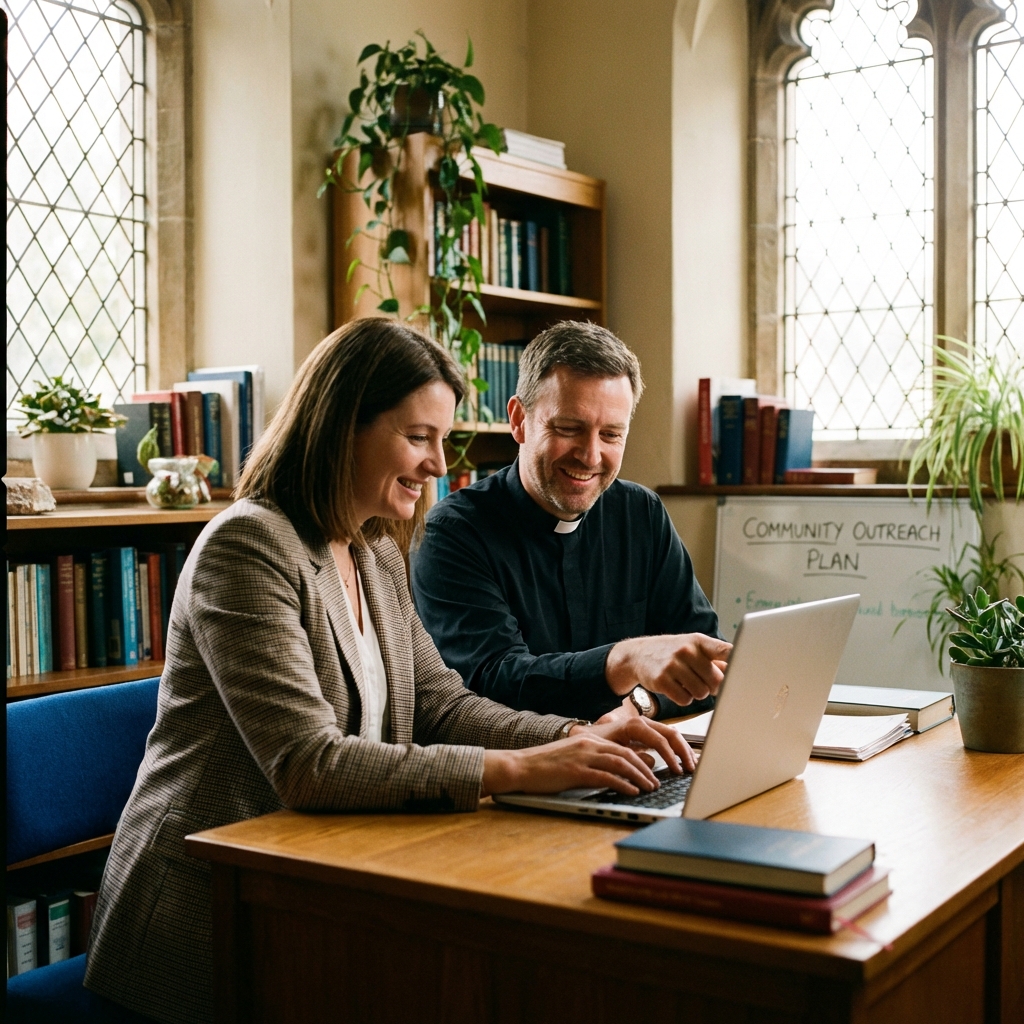
Here's a simple framework that works for churches of any size:
- Pick one thing. Not three, not five. One. The highest-impact, lowest-effort item you can identify. Do that this week.
- Assign it to a person. "We should update our Google listing" never gets done. "Sarah is updating our Google listing by Friday" does.
- Set a 90-day goal. What three or four improvements do you want to have finished in the next three months? Write them down. Check in monthly.
- Celebrate the wins. When your website loads faster, or your Google views go up, or someone says "I found you online," tell your team. Progress motivates more progress.
You don't have to overhaul everything at once. You just have to start. And once you do, you'll be surprised how quickly small changes add up.
Questions about where to focus first? We're happy to walk through it with you.