


When someone searches for a church on Saturday night or Sunday morning, they usually are not looking for a theology lecture. They are trying to answer a simple question: where can I go tomorrow, and what will it be like when I get there?
That is why churches lose visitors online long before anyone pulls into the parking lot. If your church is hard to find, unclear about service times, or vague about what a first visit looks like, people move on. A few practical digital changes can make your Sunday service much easier to discover and much easier to trust.
Start with the questions first-time visitors are already asking
Most churches think about their website from the inside out. Staff members know the ministry schedule, the building layout, and the Sunday routine, so they assume visitors know what matters too. Searchers do not. They are usually wondering where the church is, what time the service starts, what to expect for kids, how people dress, and whether they will feel awkward walking in alone.
Your digital presence should answer those questions fast. That is one reason local search matters so much. If your church is struggling to appear for nearby searches, it helps to understand why church SEO matters and how to tell if it is working. Search visibility is not the end goal, but it is the front door.
Visitors also decide quickly whether a church feels active and trustworthy. Updated service times, recent photos, and plain language do more work here than polished slogans. People are not grading your branding. They are deciding whether your church feels real.
Make your Sunday service information impossible to miss
If someone lands on your homepage, they should not need to hunt for the basics. Sunday service times, address, parking details, and children’s ministry information should be visible without much scrolling. If the most useful details are buried in a menu or an events page, people will assume visiting will be confusing too.
A strong visitor page helps, but the homepage matters just as much. Churches often underestimate how much trust they build by simply being clear. If you want a broader checklist, these website must-haves that help new visitors show up are a good benchmark. The common thread is simple: remove uncertainty before a guest ever arrives.
Specificity matters here. Saying “Join us Sunday” is fine, but “Sunday at 9:00 and 11:00 AM, parking in the north lot, kids check-in opens 15 minutes early” is far more useful. Clear details lower anxiety. Lower anxiety leads to more visits.
Strengthen your local signals so Google connects you to nearby searchers
Search engines look for consistency. Your church name, address, phone number, and service information should match across your website, Google Business Profile, and major directory listings. When those details conflict, your church becomes harder to trust algorithmically and harder to trust practically.
Your Google Business Profile deserves regular attention because it often becomes the first thing a new visitor sees. Recent photos, current hours, and accurate categories help people feel confident that the information is still valid. If you have not reviewed that profile in a while, this local discovery playbook for churches explains where to focus first.
Reviews also shape first impressions. A church with thoughtful, recent reviews looks alive. A church with none, or with old unanswered feedback, can feel uncertain even if the ministry itself is healthy. Local discovery is partly technical, but it is also social proof.
Use real photos and current proof that your church is active
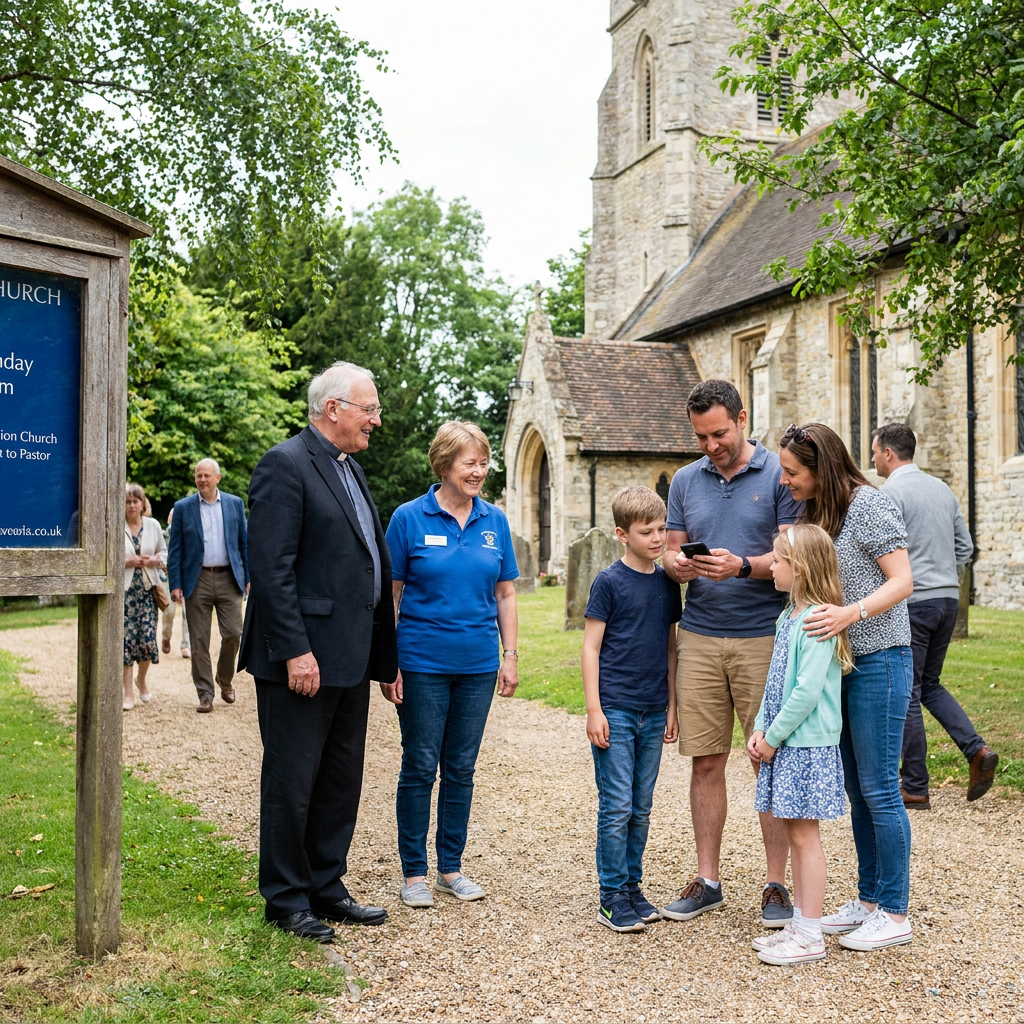
Stock-looking imagery creates distance. Real photos of your lobby, worship space, kids check-in, and welcome team help people picture themselves there. That mental picture matters because first-time visitors are not only deciding if your church is biblical or friendly. They are deciding if they can actually walk in and belong.
This is where many churches accidentally create friction. They use generic copy, outdated photos, or event promotions from months ago. That signals neglect, even when the church is doing meaningful ministry. Recent content, especially around Sunday gatherings, tells a different story. It says people are here, this place is active, and you can join us.
Short updates can help too. A recent sermon clip, a quick welcome video, or a few current event photos all reinforce that your church is present and engaged. For churches trying to understand which digital updates to tackle first, prioritizing your digital marketing improvements can keep the work focused.
Build a smoother path from online interest to a first visit
Discovery alone is not enough. Once someone finds your church, the next step should feel easy. That means every visitor-facing page should point toward one clear action: plan a visit, get directions, message the church, or view Sunday details. Too many competing options create hesitation.
It also helps to think beyond the click. A visitor who checks your website on Friday may also look at your reviews on Saturday and your social presence on Sunday morning. Those touchpoints should tell the same story. Consistent tone, current information, and a clear welcome message reduce the chance that interest fades before the visit happens.
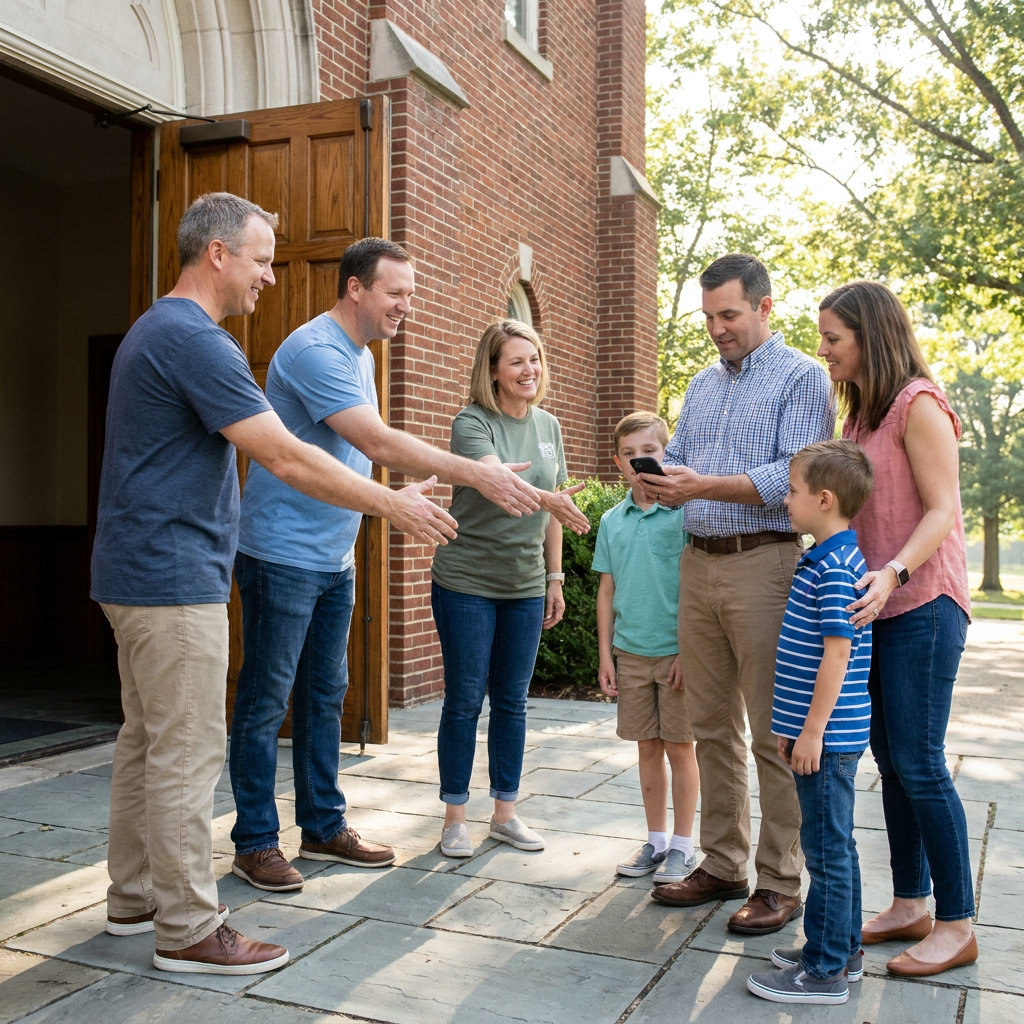
Churches that do this well treat digital hospitality as part of real hospitality. The welcome does not begin at the front door. It begins the moment someone opens a browser and wonders whether this church could be a fit for them.
If you want to make your Sunday service easier to find and easier to trust, start by reviewing your website and local listings the way a first-time guest would. Then fix the gaps that create confusion. When your digital front door feels clear and welcoming, more people make it through the physical one too. For a practical next step, visit Red Letter Connect services to see examples of the kinds of church marketing systems that support visitor growth.