


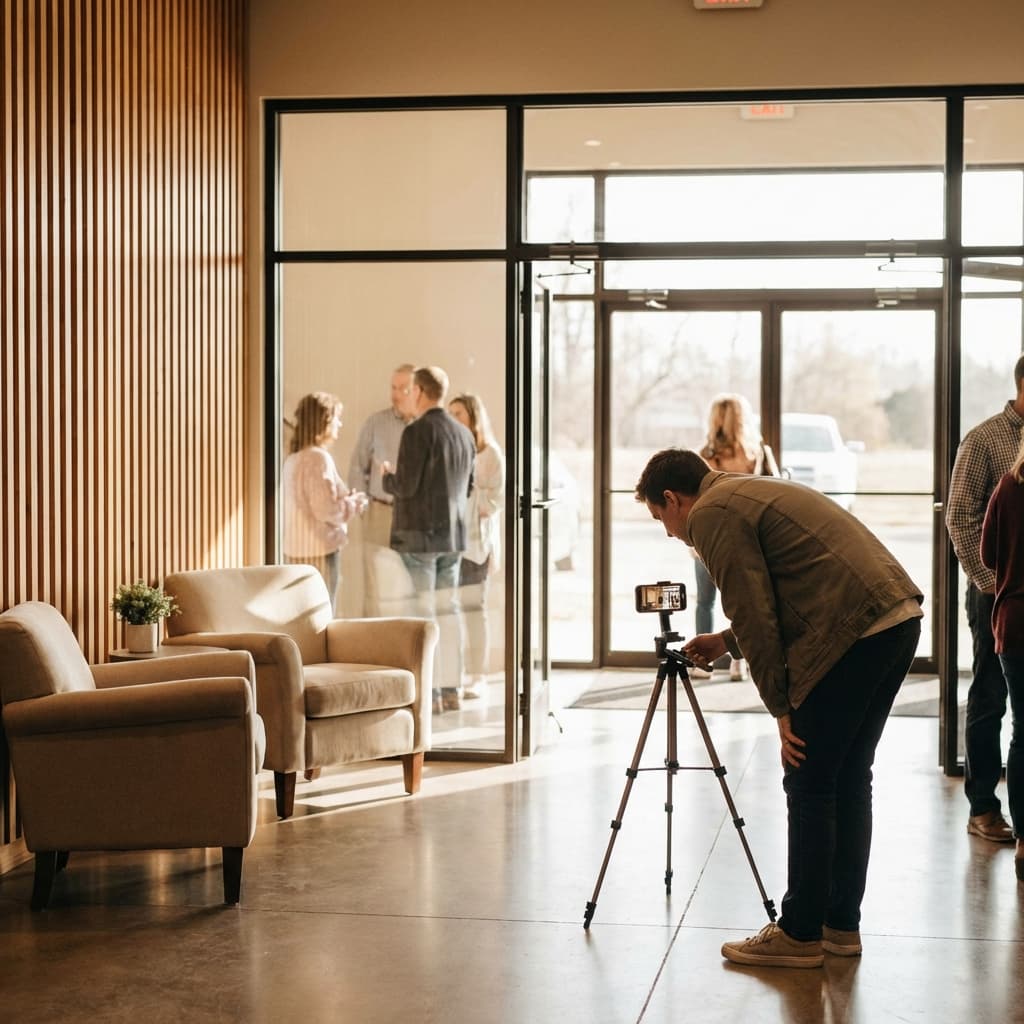
Your church probably already posts on social media. Maybe it's a Sunday recap photo, a midweek devotional graphic, or a reminder about the potluck. That's a solid start. But if you're not creating short-form video, you're missing the format that every major platform is prioritizing right now.
Short-form video (think 30 to 90 seconds) isn't a trend that's going to fade. It's become the default way people consume content on Instagram, Facebook, YouTube, and TikTok. And for churches trying to reach new people in their community, it's one of the most effective tools available today.
Why Short-Form Video Gets More Reach Than Anything Else
Social media platforms are businesses, and they make money by keeping people on the app. Short-form video does that better than any other content type. That's why Instagram Reels, YouTube Shorts, and Facebook Reels all get dramatically more organic reach than static images or text posts.
Here's what that means in practice: a photo post from your church's Facebook page might reach 3-5% of your followers. A Reel covering the same topic could reach 10-20%, plus people who don't follow you at all. The algorithm actively pushes short-form video to new audiences because it keeps users engaged longer.
For churches, this is significant. Most of your social media followers are already part of your congregation. Short-form video is one of the few organic ways to get in front of people who haven't walked through your doors yet.
What Actually Works for Church Short-Form Video
The good news is that churches already produce content that works in this format. You don't need a production studio or a full-time videographer. Here are the categories that consistently perform well:
Sermon clips. A 60-second highlight from Sunday's message, with captions, is one of the highest-performing content types for churches. The key is picking a moment that stands on its own. Don't just trim the first 60 seconds of the sermon. Find the moment where your pastor makes a point that would make someone stop scrolling.
Behind-the-scenes moments. People connect with authenticity. A quick clip of volunteers setting up for an event, the worship team rehearsing, or kids running into the children's ministry area shows the life behind the polished Sunday experience.
Quick tips and encouragements. A staff member looking directly into the camera and sharing a 30-second thought for the week is simple to produce and builds personal connection. This works especially well for associate pastors or ministry leaders who your community might not see on stage every week.
Event previews and recaps. Instead of a flyer graphic for your upcoming event, shoot a 15-second walkthrough of the space being set up, or a montage of highlights from last year. Motion and energy outperform static announcements every time.

The Technical Basics That Matter
You don't need expensive equipment, but you do need to get a few things right. These are the non-negotiable technical elements that separate videos people watch from videos people scroll past.
Vertical format (9:16). This is the native aspect ratio for Reels, Shorts, and TikTok. If you're shooting horizontal video and cropping it, you're losing quality and framing. Hold the phone vertically, or set your camera to shoot in portrait mode.
Captions are mandatory. Over 80% of social media video is watched without sound. If your video relies on audio to communicate its message, most viewers will never hear it. Use auto-caption tools (CapCut, Instagram's built-in tool, or Descript) and review them for accuracy before posting.
Hook in the first 2 seconds. You have roughly two seconds before someone decides to keep scrolling. Start with the most interesting moment, not a logo intro or a "hey guys, welcome back." The strongest sermon clips start mid-sentence, right at the emotional peak.
Keep it under 90 seconds. Shorter is almost always better for reach. The algorithm rewards completion rate (how many viewers watch to the end), so a 45-second video that people finish will outperform a 3-minute video that people abandon at the 30-second mark.
Building a Sustainable Workflow
The biggest reason churches stop posting short-form video isn't lack of ideas. It's that the process feels overwhelming. Here's a framework that keeps it manageable:
Batch your recording. Set aside one time per week (Sunday morning is ideal since you're already producing content) to capture 3-5 raw clips. This gives you material for the entire week without scheduling separate recording sessions.
Assign one person as the editor. This doesn't need to be a professional. A volunteer who knows how to use CapCut or InShot can turn raw clips into polished Reels in 15-20 minutes each. Define a simple template: caption style, font, colors that match your church's branding.
Create a posting calendar. Consistency matters more than volume. Two Reels per week, posted on a predictable schedule, will build more momentum than five Reels one week and then nothing for a month. Tuesday and Thursday mornings tend to perform well for church content, but test what works for your specific audience.
Repurpose across platforms. A single short-form video can be posted as an Instagram Reel, a YouTube Short, a Facebook Reel, and a TikTok. Minor adjustments (removing watermarks, adjusting captions) keep each platform happy, but the core content is the same. This is how you get maximum reach from minimum effort.

Measuring What's Working
Posting without tracking results is guessing. Here are the metrics that actually tell you something useful:
Views and reach. This tells you how many people saw your content, including non-followers. Compare this to your static post reach to see the difference short-form video makes.
Completion rate. What percentage of viewers watched the entire video? If completion rates are low, your videos might be too long, or the hook isn't strong enough. This is the single most important metric for the algorithm.
Shares and saves. These are higher-intent actions than likes. When someone shares a sermon clip or saves a video for later, it signals genuine resonance. Track which types of content generate the most shares, and make more of that.
Profile visits from video. This connects your video content to tangible growth. If people watch your Reel and then visit your profile, they're interested in learning more about your church. Make sure your bio, link, and recent posts make a strong impression when they do.
The churches that see real results from short-form video aren't doing anything revolutionary. They're consistent, they pay attention to what the data tells them, and they treat video as a core part of their communication strategy rather than an afterthought.
If your church is ready to start creating short-form video but isn't sure where to begin, reach out to our team. We can help you build a plan that fits your resources and your goals.